Mustard Greens
Nutrition
| Serving Size | 85 grams |
|---|---|
| Calories | 20 |
| Daily Value | |
| Calories From Fat | 0 |
| Total Fat 0 | 0% |
| Saturated Fat 0 | 0% |
| Trans Fat 0 | 0% |
| Cholesterol 0 | 0% |
| Sodium 20mg | 1% |
| Total Carbohydrate 4g | 1% |
| Dietary Fiber 3g | 11% |
| Sugars 1g | 2% |
| Sugars Added 0g | 0% |
| Protein 2g | 4% |
| Calcium 100mg | 8% |
| Iron 1.4mg | 8% |
| Vitamin D 0mcg | 0% |
| Potassium 330mg | 7% |
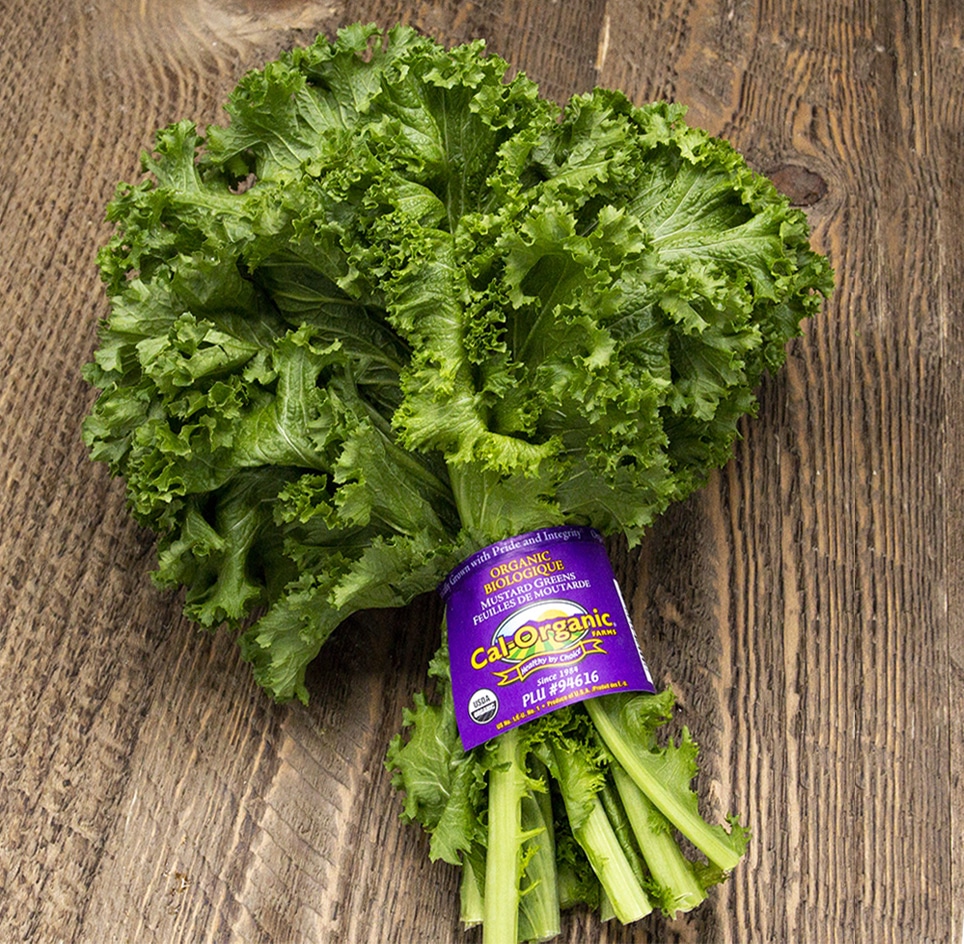
Mustard greens are a natural diuretic and a good source of calcium, fiber, and protein. They also help support vision and regulate blood pressure.
Among leafy vegetables, mustard greens provide some of the highest concentrations of three powerful antioxidants: vitamin K, A, and C. This helps boost detoxification activities in the body, which is vital in supporting cardiovascular health. This pungent and peppery green adds a flavorful kick to salads, or can be cooked down for a softer taste.
Refrigerate the greens in an airtight plastic bag, unwashed and away from liquids. This will help the greens stay fresh for up to a week.
Rinse in cold water, removing parts that have wilted or have holes. If cooking, chop leaves into 1/2-inch slices.
Toss the fresh leaves in a salad or stir into sauces or soups. Sauté with garlic or simmer in a broth with bacon.
Mustard greens are robust with a pungent flavor similar to mustard or horseradish. When raw, mustard greens are crunchy.
Availability
- Jan
- Feb
- Mar
- Apr
- May
- Jun
- Jul
- Aug
- Sep
- Oct
- Nov
- Dec