Green Chard
Nutrition
| Serving Size | 85 grams |
|---|---|
| Calories | 15 |
| Daily Value | |
| Calories From Fat | 0 |
| Total Fat 0 | 0% |
| Saturated Fat 0 | 0% |
| Trans Fat 0 | 0% |
| Cholesterol 0 | 0% |
| Sodium 150mg | 7% |
| Total Carbohydrate 3g | 1% |
| Dietary Fiber 1g | 4% |
| Sugars 1g | 2% |
| Sugars Added 0g | 0% |
| Protein 2g | 4% |
| Calcium 40mg | 3% |
| Iron 1.5mg | 8% |
| Vitamin D 0mcg | 0% |
| Potassium 320mg | 7% |
Green chard has high values of vitamin K. Its antioxidant properties help to prevent heart disease and boost the immune system.
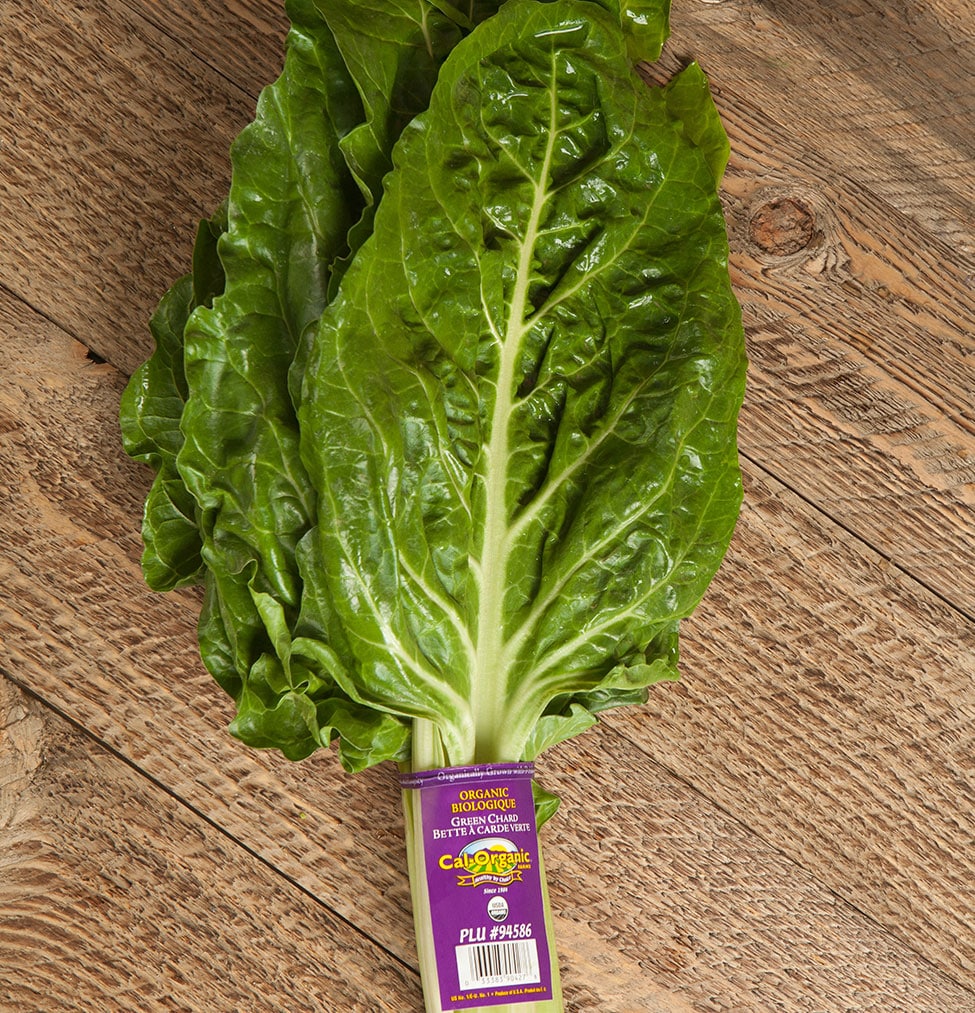
A member of the beet family, chard is a leafy vegetable with stems that vary in color. It has a slightly bitter flavor and is best served sautéed or raw in a salad. It is also one of the most antioxidant rich foods, containing beta-carotene, vitamins E and C and many other disease fighting antioxidants.
Keep green chard refrigerated in an airtight plastic bag, unwashed and away from liquids. It should stay fresh for up to five days.
Narrow, embossed leaves in striking blue-green hues. Green chard has a strong texture with a savoyed shape.
Juice raw leaves or mix in a salad for maximum nutrition. Slow-cook green chard with meat and carrots for a hearty meal.
Green chard tastes mild, buttery, and slightly bitter to some. To highlight a smooth, salty flavor, heat the green chard.
Availability
- Jan
- Feb
- Mar
- Apr
- May
- Jun
- Jul
- Aug
- Sep
- Oct
- Nov
- Dec