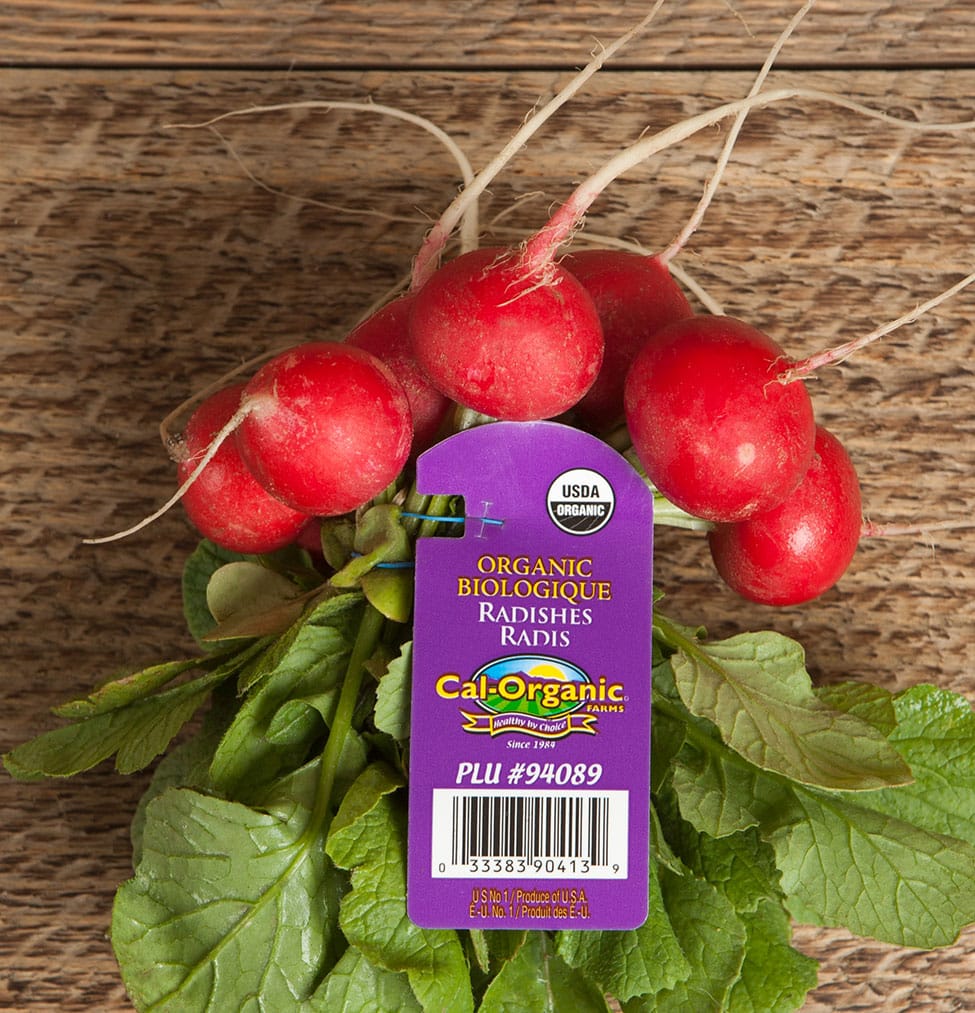
Red Radishes
Nutrition
| Serving Size | 7 radishes (85 grams) |
|---|---|
| Calories | 0 |
| Daily Value | |
| Calories From Fat | 10 |
| Total Fat 0 | 0% |
| Saturated Fat 0 | 0% |
| Trans Fat 0 | 0% |
| Cholesterol 0 | 0% |
| Sodium 55mg | 2% |
| Total Carbohydrate 3g | 1% |
| Dietary Fiber 1g | 4% |
| Sugars 2g | 4% |
| Sugars Added 0g | 0% |
| Protein <1g | 0% |
| Calcium 20mg | 2% |
| Iron 0.3mg | 2% |
| Vitamin D 0mcg | 0% |
| Potassium 200mg | 4% |
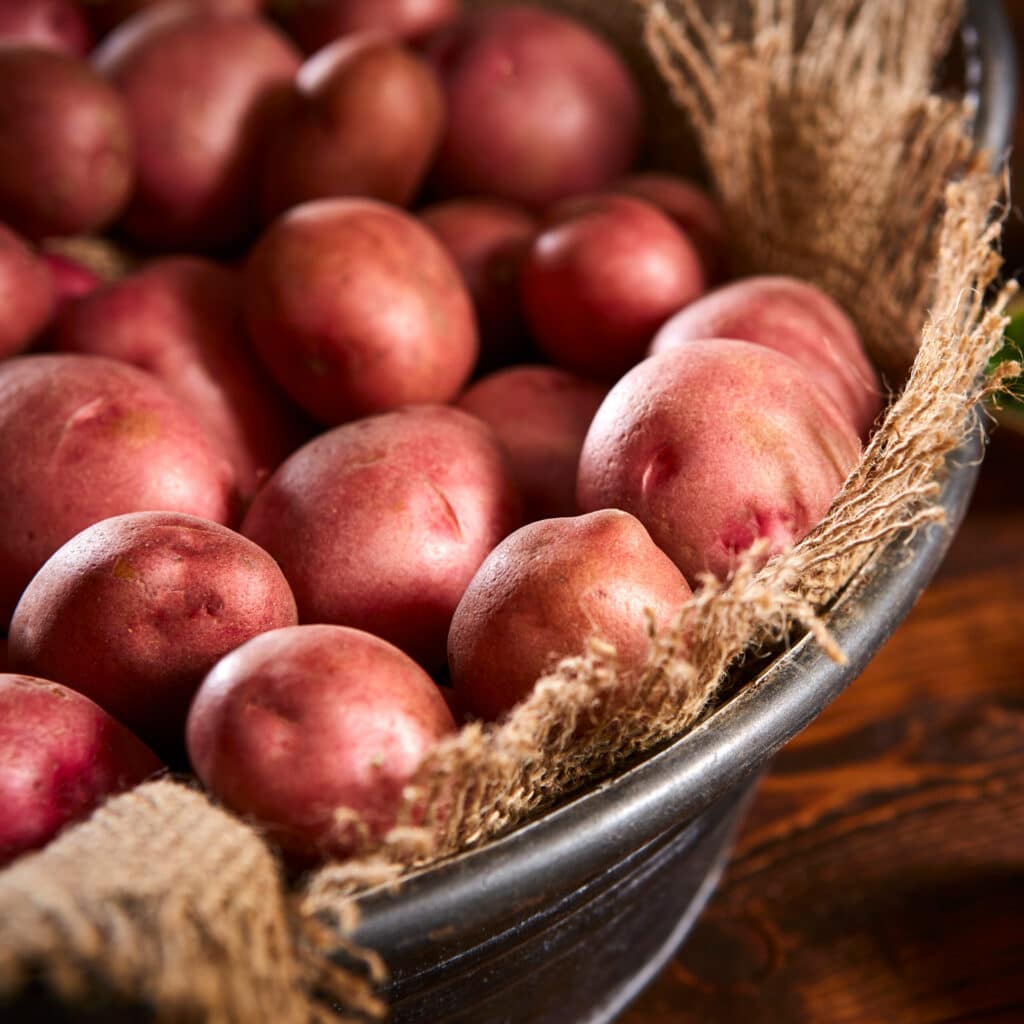
Red radishes are high in vitamin C and folate. Its antioxidants and anti-inflammatory properties support heart and blood health.
Radishes offer a host of health benefits, but are typically under-appreciated. Their pungent flavor and natural spice helps eliminate excess mucus in the body and can be especially helpful with fighting a cold or soothing a sore throat.
Remove the greens a 1/2-inch above the root, then refrigerate separately. Radish roots will stay fresh for a week; greens for a few days.
Rinse and scrub the skin, then chop the tops and bottoms from the root. Slice thinly or cut into quarters. Wash and dry the leaves.
Red radishes can be grilled, roasted, or pickled. Eat raw slices as snacks or add to salads, slaws, and soups. The greens can be sautéed or steamed.
Red radishes are crisp and juicy with a sharp, spicy taste. The leaves offer a pungent , peppery flavor similar to the root.
Availability
- Jan
- Feb
- Mar
- Apr
- May
- Jun
- Jul
- Aug
- Sep
- Oct
- Nov
- Dec